partager partager

International financial integration remains a key objective of structural reform in the Mediterranean region.

By Dr Thomas Lagoarde-Segot, associate professor at Euromed Management Marseille and affiliated researcher at DEFI – Aix-Marseille University


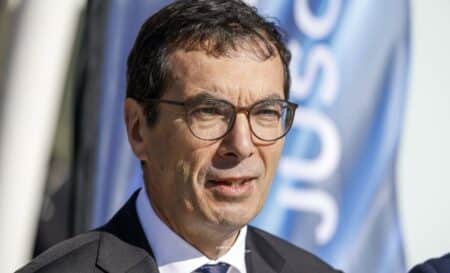
Thomas Lagoarde-Segot, visiting professor at Euromed Management Marseille, advocates financial integration (photo Euromed Management)
Despite a global crisis the scale of which seems to call into question the policies arising from the Washington Consensus, international financial integration remains a key objective of structural reform in the Mediterranean region. 

However, recent studies show that, despite not really opening up their economies, the countries to the south of the Mediterranean are increasingly vulnerable to waves of ‘pure contagion’.

Unlike ‘fundamental contagion’ (a physical phenomenon arising from macroeconomic interdependence), ‘pure contagion’ reflects a cognitive shift among investors that brings about excessive synchronisation of low-volatility phases on the capital markets and a destabilisation o financial systems. In other words, it is the reaction of the markets to a deteriorating global climate that causes a psychologically, rather than an economically, driven crisis.

While ‘fundamental contagion’ can be contained by concrete measures to restrict interdependence (monitoring or taxing capital flows), such measures are not effective against ‘pure contagion’, which is largely dependent on psychological factors.

Nevertheless, while observing the discussions on restructuring global finance, we can suggest some specific ideas for the Mediterranean region. First, it seems essential to improve the quality of financial and extra-financial information distributed to investors. This would help to better align investment decisions with social and economic requirements, but it does indirectly raise the issue of training.

Moves to set up a Euro-Mediterranean area for management training therefore also have a role to play. Lastly, and more generally, it is perhaps time that we recognised the imperfect way in which markets allocate resources. We need to rethink the role of banks, governments and international institutions in
development financing.

Bibliography: Lagoarde-Segot, T., Lucey, B., 2009. Shift contagion vulnerability in the MENA stock
markets. The World Economy 32-10, 1478-1497.


Frédéric Dubessy


Mercredi 24 Novembre 2010


Lu 740 fois
© Copyright Econostrum.info
Conformément au code sur la propriété intellectuelle, toute reproduction ou transmission de cet article est strictement interdite, sauf accord formel d'Econostrum.info


Publicité


avis d'expert
Aux racines de la croissance verte en région Méditerranée
Dr. Christian Averous Par Dr. Christian Averous, économiste de l’Environnement
Promouvoir une croissance verte dans la région Méditerranée, en soutien au développement durable et à la réduction de la pauvreté, s’impose comme défi majeur de notre temps. English version

Pour une réorganisation des relations entre l’Union européenne et les pays méditerranéens
Jean-François Coustillière Par Jean-François Coustillière, consultant sur les questions euro-méditerranéennes
Aujourd’hui l’Union européenne (UE) dispose de trois cadres différents qu’elle a, elle-même, proposés, pour organiser la coopération en Méditerranée : le Processus de Barcelone (PB) né en 1995, la politique européenne de voisinage (PEV) née en 2003 et l’Union pour la Méditerranée (UpM) née en 2008.

Aspects géopolitiques de la crise syrienne
Michel Roche Par Michel Roche, consultant
Depuis plus d’un an la Syrie vit un drame et on ne voit pas émerger une solution. Les résolutions pourtant peu ambitieuses des Nations Unies, ne sont pas respectées et l’envoi d’un contingent d’observateurs qui atteindra 300 hommes (sic) parait bien dérisoire face à l’ampleur de la crise.