Femise analyses liberalisation in countries south of the Mediterranean
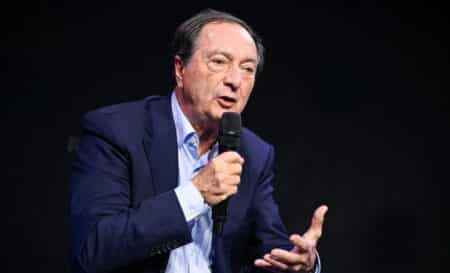
For Raed Safadi, productivity on the southern rim of the Mediterranean is a crucial issue (Photo: F.Dubessy)
MEDITERRANEAN. Experts from Femise (Forum EuroMéditerranéen des Instituts de Sciences Économiques) delivered their Firm, Trade and Development reports at a workshop organised by Defi, the research centre of the Université de la Méditerranée (Aix-Marseille II) on economic development and international finance in Aix-en-Provence on 4-5 July 2011. In delivering their conclusions, these scientists made several observations that could also been as appeals for assistance. "The role of economists is to push back the frontiers of knowledge and make recommendations in the area of economic policy. Yet academic research is hindered by a lack of data," laments Patrick Plane of Cerdi (Centre de Recherche sur le Développement International - Université d'Auvergne). One argument was presented by other experts such as Raed Safadi, Deputy Director of the Trade and Agricultural Directorate of the OECD. "The demands of people in countries south of the Mediterranean will grow. After the revolution, we noticed that the picture we had of Tunisia did not reflect reality on the ground there. Statistics had been distorted and used for political purposes." Meanwhile, Khaled Sekkat (Femise and Université de Bruxelles) has said that "Our message to these countries is: Show us your statistics and we will both gain advantage from them." Winners and losers from liberalism Jean-Louis Reiffers, President of the Femise Scientific Committee, readily acknowledges the limitations of the exercise. "In the Arab spring countries, our contacts tell us, "We have followed your advice: We have privatised our telecoms, opened up our transport networks, and so on. This has increased social division. Noone cares about winners and losers when it comes to commercial exchanges. Funds must be found with which to offset the social division created by liberalisation." He goes on to say that "In overall terms, the relationship between Europe and the Mediterranean is producing very good results, but remains unbalanced. When I see the devastating effects of hypermarkets on businesses in villages, I do not see a bright future for souks. Such plans must be credible. My message to Arab countries is: Continue to open up, but not on just any terms." Frédéric Dubessy
Mercredi 20 Juillet 2011
Lu 1084 fois
© Copyright Econostrum.info
Conformément au code sur la propriété intellectuelle, toute reproduction ou transmission de cet article est strictement interdite, sauf accord formel d'Econostrum.info |
Aux racines de la croissance verte en région Méditerranée
Par Dr. Christian Averous, économiste de l’Environnement Promouvoir une croissance verte dans la région Méditerranée, en soutien au développement durable et à la réduction de la pauvreté, s’impose comme défi majeur de notre temps. English version
Pour une réorganisation des relations entre l’Union européenne et les pays méditerranéens
Par Jean-François Coustillière, consultant sur les questions euro-méditerranéennes Aujourd’hui l’Union européenne (UE) dispose de trois cadres différents qu’elle a, elle-même, proposés, pour organiser la coopération en Méditerranée : le Processus de Barcelone (PB) né en 1995, la politique européenne de voisinage (PEV) née en 2003 et l’Union pour la Méditerranée (UpM) née en 2008.
Aspects géopolitiques de la crise syrienne
Par Michel Roche, consultant Depuis plus d’un an la Syrie vit un drame et on ne voit pas émerger une solution. Les résolutions pourtant peu ambitieuses des Nations Unies, ne sont pas respectées et l’envoi d’un contingent d’observateurs qui atteindra 300 hommes (sic) parait bien dérisoire face à l’ampleur de la crise.
|
|
||||||||||||||
|
|
||||||||||||||||


Par Dr. Christian Averous, économiste de l’Environnement
Par Jean-François Coustillière, consultant sur les questions euro-méditerranéennes
Par Michel Roche, consultant